Shorts Are Not the Whole Strategy. They Are the Entry Point.
Shorts can help creators get discovered, but they work best when they support a stronger long-form content strategy. Learn when Shorts help, when they distract, and how MintiStudio helps turn long videos into a consistent Shorts workflow.
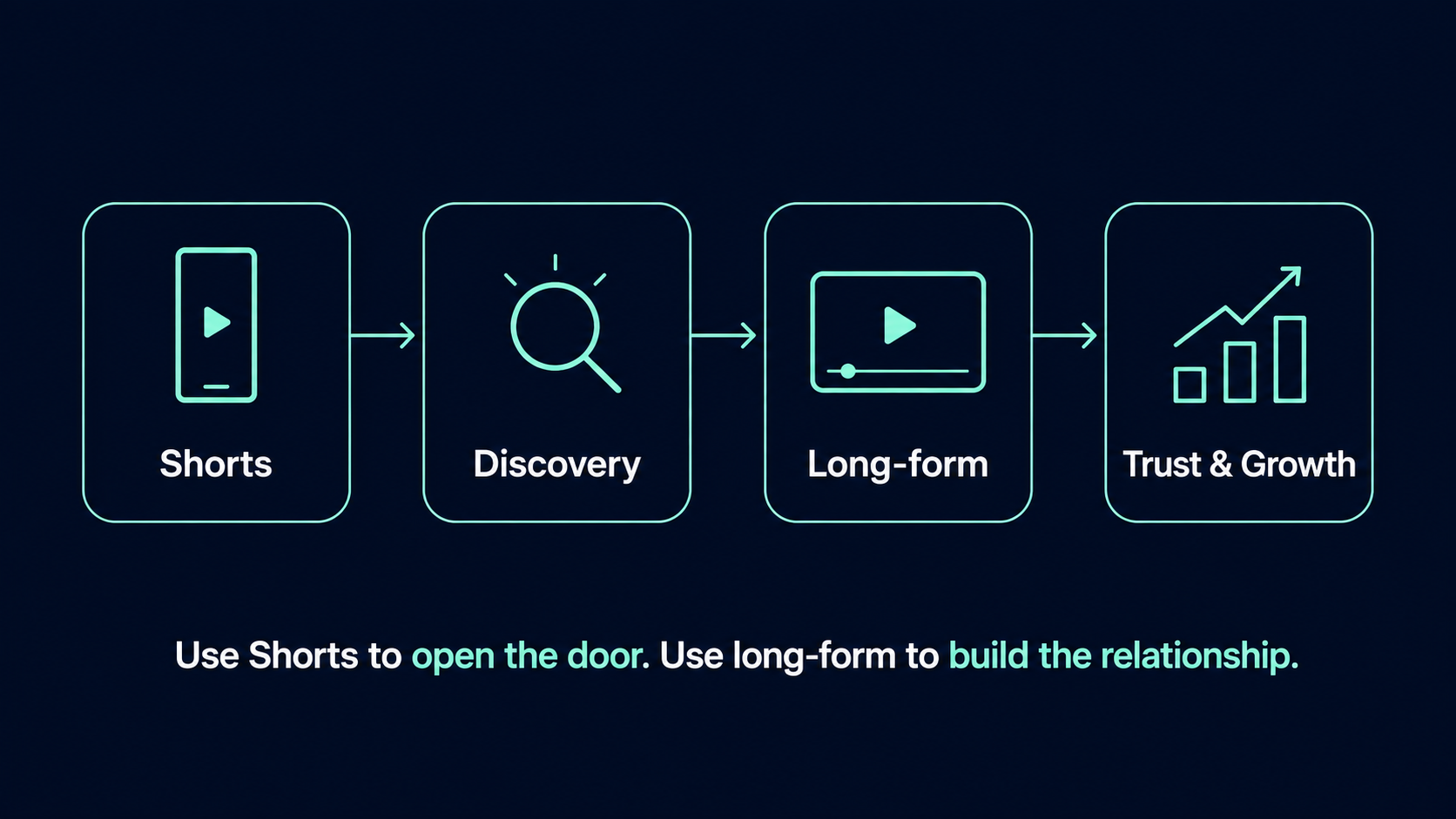
Shorts work best when they support the bigger strategy.
Start free with MintiStudio
Shorts are powerful, but they are not the whole strategy
YouTube Shorts can be a powerful way to reach new people. They are fast, mobile-friendly, easy to consume, and built for discovery.
But Shorts should not always be treated as the entire YouTube strategy.
For many creators, the stronger approach is to use Shorts as an entry point: a way for new viewers to discover one clear idea, meet your voice, and decide whether they want more from you.
That “more” may be a long-form video, a podcast episode, a course, a newsletter, a coaching offer, a community, or simply a deeper relationship with your channel.
This distinction matters. If Shorts become the only thing you focus on, you may start chasing quick views instead of building trust. If Shorts support your long-form content, they can become a useful discovery layer around the work you already create.
The first seconds matter because viewers did not choose you yet
With a long-form YouTube video, the viewer usually made a choice before watching. They saw a title, thumbnail, or search result and clicked.
Shorts are different.
In the Shorts feed, the viewer often did not choose your video. It appeared in front of them. That means the first few seconds carry much more weight.
A Short should not begin slowly. It should not spend too much time saying hello, introducing the channel, or warming up to the point. The opening should quickly make the viewer understand why they should keep watching.
A strong opening can be:
- a direct question
- a surprising statement
- a clear problem
- a useful promise
- a visual moment that creates curiosity
- a sentence that starts in the middle of the idea
The goal is not to trick the viewer. The goal is to respect the format.
Shorts move quickly. The opening needs to meet that speed.
A good Short should stand on its own
 One common mistake is cutting a random section from a long video and expecting it to work as a Short.
That rarely works.
A good Short should make sense even if the viewer has never seen the full video. It needs enough context to be understandable, but not so much setup that it becomes slow.
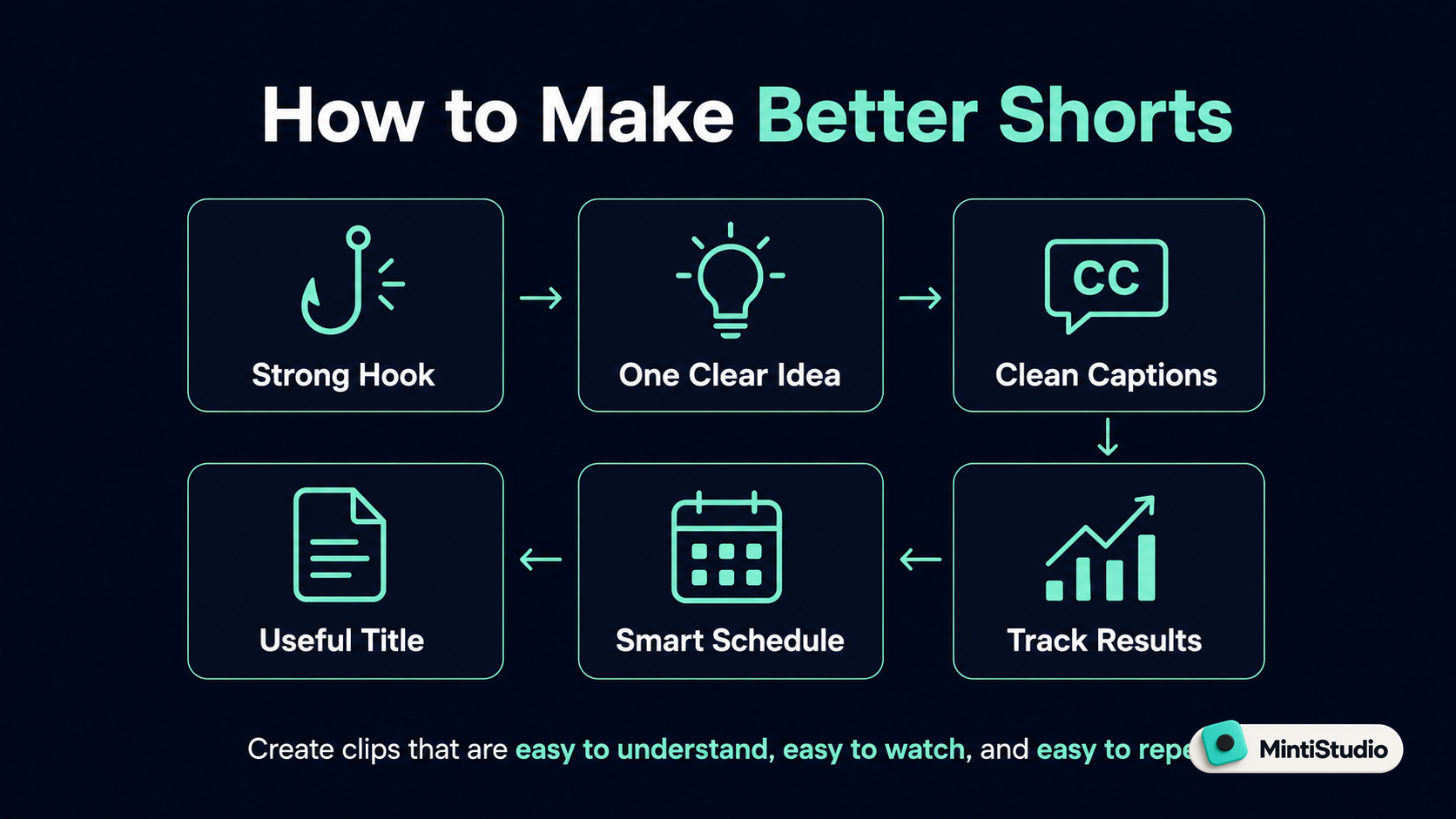
Before publishing a clip, ask:
- Does this clip have one clear idea?
- Does it start quickly?
- Does it make sense without the full video?
- Does it end cleanly?
- Would a new viewer understand why this matters?
This is where long-form creators have an advantage. If you already create interviews, lessons, sermons, coaching videos, webinars, podcasts, or educational content, your best short-form moments may already exist inside those videos.
You do not need to invent a completely separate content strategy every day. You can turn strong moments from your long videos into focused Shorts.
Shorts are often better as discovery than direct monetization
Shorts can bring reach, awareness, and new subscribers. But for many creators, the deeper business value still comes from trust.
Trust usually takes more than 30 or 60 seconds.
Long-form content gives people time with you. It lets you explain, teach, show your thinking, tell stories, answer objections, and build credibility.
That is why Shorts often work best as the first touch, not the whole relationship.
A Short can introduce the idea. A long-form video can deepen it.
A Short can create curiosity. A longer video can build trust.
A Short can bring someone to your channel. Your deeper content can show them why they should stay.
For creators who sell services, courses, coaching, consulting, books, memberships, or educational products, this matters a lot. The Short may start the relationship, but the long-form content often does more of the trust-building work.
The smartest use of Shorts: clip from the same value proposition
Shorts work better when they are connected to the same value proposition as your long-form content.
If your long videos teach psychology, your Shorts should not feel like random entertainment clips. If your channel helps business owners, your Shorts should give small pieces of that same help. If your podcast is about faith, education, health, or personal growth, your Shorts should feel like samples of the deeper conversation.
This keeps your audience aligned.
The viewer who likes the Short should naturally understand why they might also like the full video.
That is the cleanest strategy:
- Use long-form content as the main depth layer.
- Use Shorts as discovery samples from that same content.
- Keep the promise consistent between the Short and the full video.
When the Short and the long video feel connected, the viewer journey becomes much easier.
Upload details still matter
Shorts may feel casual, but publishing details still matter.
A useful Short still needs a clear title. The title should help YouTube and the viewer understand what the clip is about.
A description can also help provide context, especially when the Short is connected to a larger video, offer, topic, or channel theme. Many creators leave Shorts descriptions empty, but that is a missed opportunity.
Hashtags should be simple and relevant. You do not need a huge list. A few accurate hashtags are better than a messy pile of generic ones.
A practical publishing checklist looks like this:
- Start with a clear hook.
- Keep the clip focused.
- Use readable captions.
- Write a useful title.
- Add a short description.
- Use a few relevant hashtags.
- Choose or prepare a thumbnail when it matters.
- Publish at a time that fits your audience.
None of these steps are complicated alone. The hard part is doing them consistently.
Consistency matters more than random bursts
If you create several Shorts from one long video, it can be tempting to publish them all at once.
Usually, that is not the best default.
YouTube’s own Help guidance says a consistent, sustainable release schedule is important for building audience expectations. YouTube also explains that viewers can receive a maximum of three upload or live notifications from one channel within a 24-hour period.
Sources:
- YouTube Help: Upload schedule tips
- YouTube Help: Fix subscriber notification problems
- YouTube Help: Skip sending upload notifications
This does not mean there is one perfect posting number for every creator.
It means the schedule should be intentional.
For many creators, one to three Shorts per day can be a practical starting point when they have enough strong clips. Some creators should post less. Some can post more. The right cadence depends on the audience, the quality of the clips, and how much content the creator can sustain without burning out.
The key is to avoid turning a useful content batch into a same-day pileup.
Where MintiStudio helps
This is exactly where MintiStudio helps creators.
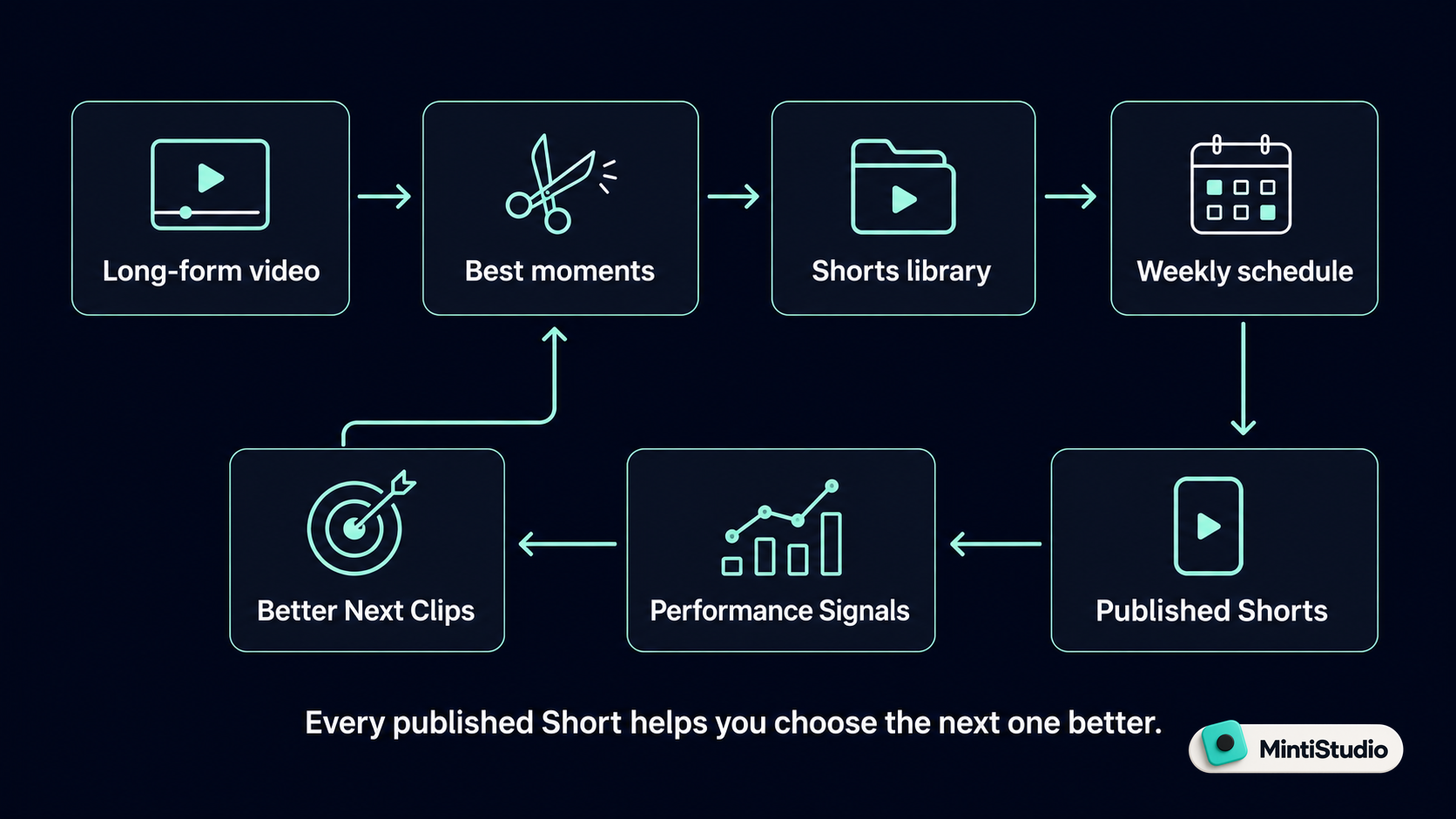
The strategy sounds simple: find strong moments, make them vertical, add captions, write useful publishing details, schedule consistently, and track what works.
But doing that every week takes time.
MintiStudio helps with the parts of the workflow that usually slow creators down:
- Find stronger moments from long videos. Use the transcript and AI suggestions to identify clips that can stand on their own.
- Protect the first few seconds. Review the beginning of each Short so it starts with a clear idea instead of a slow intro.
- Keep clips focused. Turn long videos into Shorts that are only as long as they need to be.
- Add captions and styling. Make vertical clips easier to watch with readable captions and clean framing.
- Prepare publishing details. Create better titles and descriptions instead of publishing empty or unfinished Shorts.
- Schedule consistently. Spread Shorts across the week instead of posting everything at once.
- Publish across platforms. Send Shorts to YouTube, Instagram, and Facebook from one workflow.
- Track performance. See which topics, hooks, and clips are worth repeating.
MintiStudio does not replace your content strategy.
It helps you turn that strategy into a repeatable workflow.
DIY or done-for-you
Some creators want to manage the workflow themselves. They want to upload the video, review the transcript, choose the clips, style the Shorts, schedule the posts, and check the results.
That is a good fit for using MintiStudio yourself.
Other creators want the outcome without doing every operational step. They are busy recording, teaching, coaching, interviewing, or running their business. They may not want to download videos, upload files, review every clip, prepare descriptions, and manage the publishing calendar.
That is where MintiStudio Autopilot fits.
With Autopilot, your long videos can be turned into captioned vertical Shorts, scheduled across your channels, and reported back to you inside your Minti account.
You stay focused on the content.
MintiStudio helps turn that content into a steady short-form publishing system.
The better question is not “Should I post Shorts?”
The better question is:
“What role should Shorts play in my content strategy?”
For many creators, Shorts should not replace long-form content. They should support it.
They should help new people discover your ideas. They should give small samples of your deeper work. They should point toward the channel, the full video, or the larger relationship you want to build.
That is a healthier way to think about Shorts.
Not as the whole strategy.
As the entry point.
Next step
Start with one strong long-form video. Find three to five moments that can stand on their own, turn them into Shorts, and schedule them across the week.
More from the blog
YouTube Shorts for Consultants: A Practical Workflow for Public Proof Without Sharing Client Confidentials
Consultants often have strong expertise locked inside private calls, workshops, and explainers. This guide shows how to turn those long recordings into buyer-relevant Shorts that build public proof, while keeping confidential details out of the workflow.
Turn Prospect Objections into Your Next Teaching Video
Use the questions prospects ask on sales calls to plan teaching videos that answer real objections, show your thinking, and create standalone moments that can become Shorts. This guide gives coaches and consultants a simple way to turn one conversation topic into a useful long video and a set of clip-ready lessons.