Turn Prospect Objections into Your Next Teaching Video
Use the questions prospects ask on sales calls to plan teaching videos that answer real objections, show your thinking, and create standalone moments that can become Shorts. This guide gives coaches and consultants a simple way to turn one conversation topic into a useful long video and a set of clip-ready lessons.
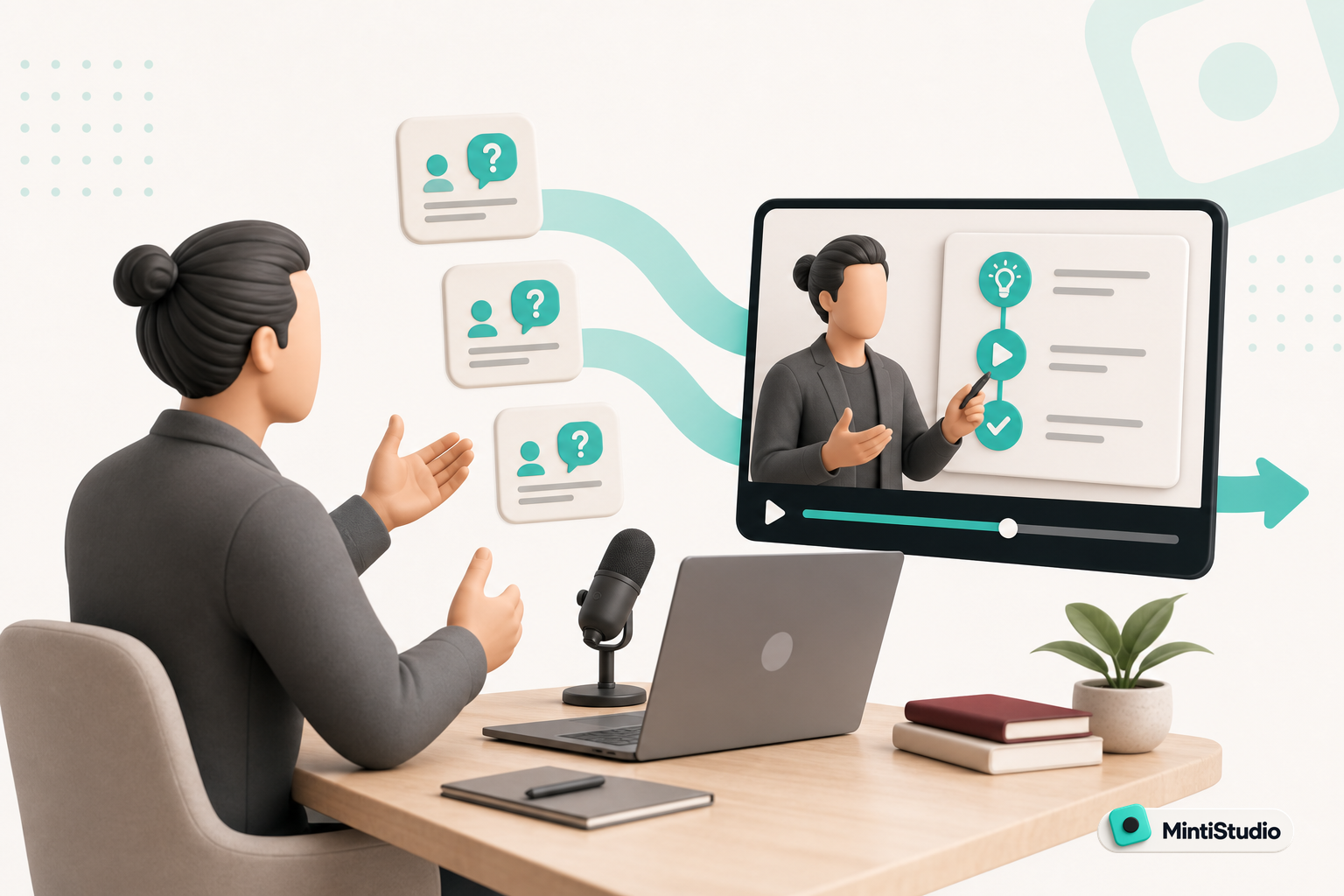
Your next teaching video is probably already sitting inside a sales conversation.
Start with the question behind the objection
If you are a coach or consultant, you already hear the same kinds of concerns in discovery calls, consults, and intro meetings.
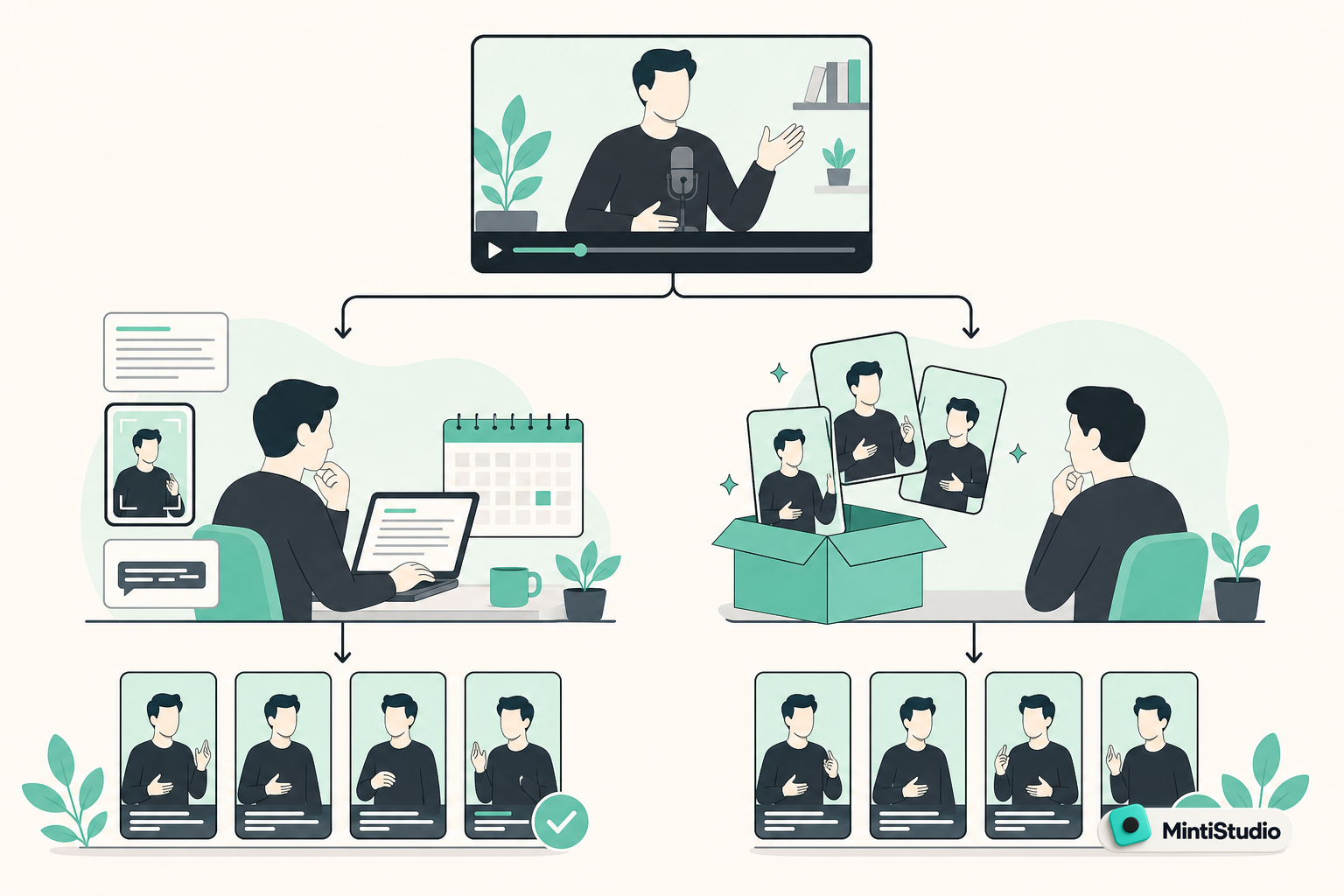
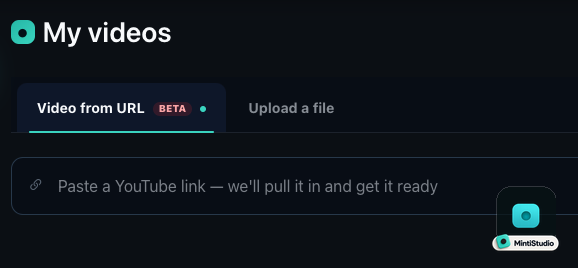 Screenshot from MintiStudio
A prospect asks whether your approach will work for their situation. They want to know how long it takes, what happens if they are busy, whether they need to be at a certain level first, or how your method is different from the other options they have seen.
Those questions are not just sales objections. They are also YouTube content ideas for coaches.
A good teaching video often starts by answering one question clearly. When you build from a real objection, you are not guessing what to teach. You are making a video that helps someone make a decision.
That is useful for the viewer and useful for your channel.
It gives you a topic with a built-in problem, a clear answer, and a reason to keep watching.
Why objection-based topics work well for coaches and consultants
Prospects do not usually search for your service name first. They search for the problem, the concern, or the comparison they need to understand before they are ready to buy.
That means your teaching video should do more than describe what you do. It should help the viewer move through one part of the decision.
A strong topic drawn from a sales call can do three jobs at once:
- it answers a real concern in plain language
- it shows how you think about the problem
- it gives your audience a reason to trust your process before they hire you
You do not need to turn every objection into a pitch. In fact, the better approach is usually the opposite. Teach the concept well enough that the viewer feels informed, even if they are not ready to buy yet.
That is how a video becomes useful without feeling promotional.
The objection is the topic, not the whole script
Not every objection should become a video exactly as spoken.
A sales call is messy. People interrupt themselves, compare options out loud, and describe their situation in a way that only makes sense to them.
Your job is to turn that raw concern into a clean teaching angle.
For example:
- “Will this work if I do not have a big audience?” becomes a video about who the method is for and what it does not require
- “Do I need to post every day?” becomes a video about consistency, workload, and what actually matters in the first month
- “How is this different from a course I already bought?” becomes a video about implementation versus information
- “What if I do not have time to learn another tool?” becomes a video about workflow choice and delegation
The topic is not the objection itself. The topic is the decision behind the objection.
Build each video around one clear promise
A useful teaching video usually has one promise that a viewer can understand in a sentence.
Try this structure:
When a prospect asks X, the real question is Y, and here is how to think about it.
That gives you a clean title and a clean opening.
Examples:
- When a prospect asks whether they need more followers, the real question is whether the offer matches their current stage
- When a prospect asks whether they should start with Shorts or long-form video, the real question is how they want viewers to discover them
- When a prospect asks whether they need a complicated funnel, the real question is what they can actually maintain
This is the same reason direct-response content works. The viewer knows what the video will help them decide.
And if you want that video to lead somewhere, the path from lesson to offer is much easier when the viewer already feels understood.
Turn one objection into three content angles
One sales objection can support more than one piece of content.
A simple way to expand your content plan is to split the concern into three angles:
| Angle | Description |
|---|---|
| 1. The beginner version | This is the simplest explanation for someone who has never heard the concept before. If a prospect asks whether they need a website, the beginner version might explain what a website actually does in the buying process. |
| 2. The comparison version | This angle helps a viewer choose between two options. If a prospect asks whether they should hire you or do it themselves, the comparison version can explain what each path costs in time, attention, and support. |
| 3. The implementation version | This version answers the practical question. If a prospect asks how to start, the implementation video can show the first three steps without drifting into theory. |
Using these three angles keeps you from repeating yourself. It also gives you a small content system built from the questions you already hear.
A simple way to find topics from real calls
You do not need a perfect research process. You need a repeatable one.
After each call, note any question that came up more than once. Look for the line where a prospect said, in effect, “I am interested, but I need to understand this first.”
Then sort that line into one of these buckets:
- beginner understanding
- comparison between options
- implementation or next steps
- timing or workload
- risk, uncertainty, or trust
If a question keeps appearing, it is probably not just a sales objection. It is a sign that your audience needs a clearer teaching video.
This is where your content plan gets easier. You are no longer brainstorming from scratch. You are collecting the language your audience already uses.
Where MintiStudio helps
MintiStudio turns long videos into Shorts for YouTube and Instagram Reels. Facebook Page publishing is supported when a Facebook Page is connected.
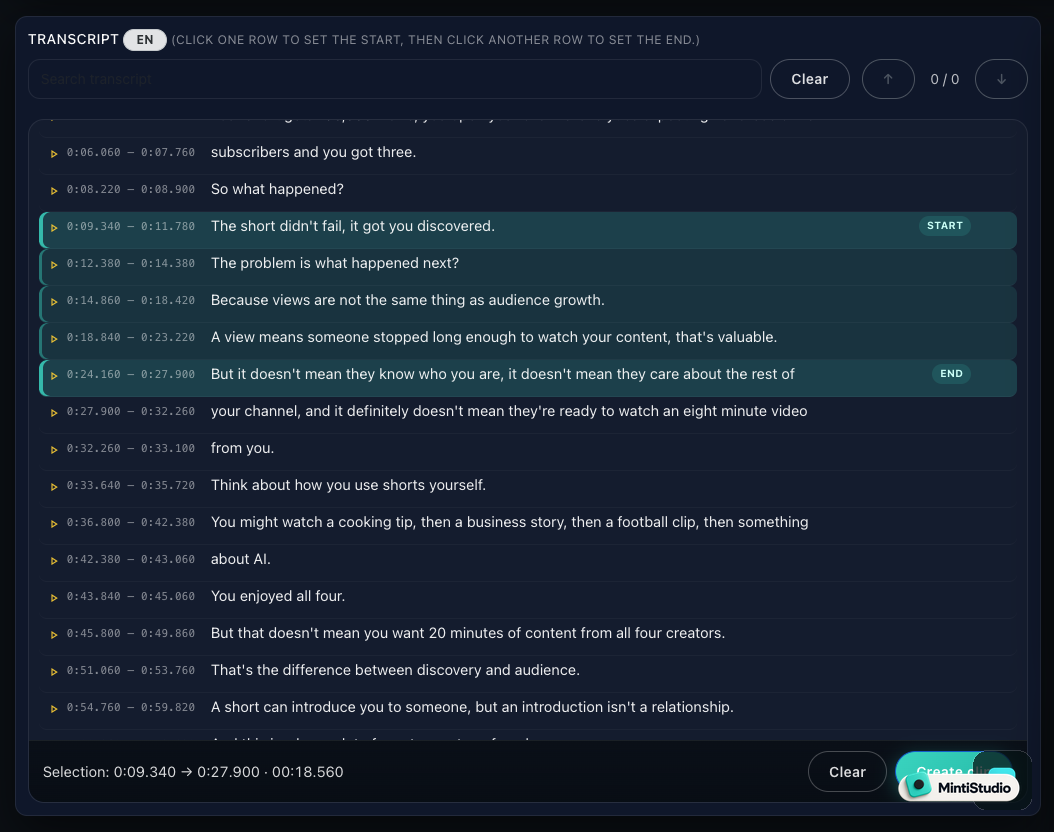 Screenshot from MintiStudio
That matters because objection-based teaching videos often contain several good standalone moments. If you record one clear lesson, you may also have smaller answers inside it that can become Shorts.
Use a long teaching video as your source
You can add a video by pasting a YouTube link or uploading a file. That makes it practical to work from the teaching videos you already publish.
If your long video answers the main objection well, MintiStudio can help turn that recording into shorter pieces for reach and recall.
Find the moments that stand alone
MintiStudio supports AI clip suggestions and transcript-based clip selection, which helps when you want to pull one clear answer from a longer lesson.
That is useful for objection videos because the best Short is often a single complete answer, not a clipped fragment that only makes sense in the middle of a longer explanation.
If a prospect asked a question on the call, your video can answer it in a way that makes sense on its own.
Prepare the Short for publishing
MintiStudio supports caption style templates, reframing horizontal video to vertical, scheduling and publishing, a publishing calendar, comment tracking, and analytics.
That means one recorded explanation can move through the full workflow from lesson to Short to published post without you rebuilding the same content manually each time.
A simple workflow for turning objections into teaching videos
1. Collect recurring questions
After calls, write down the concerns that come up repeatedly.
Do not over-edit them yet. You are looking for patterns.
2. Rewrite the question as a teaching topic
Change “Will this work for me?” into a more specific promise.
For example, if someone is unsure whether they need a larger audience, the lesson might become “How to know if your offer fits your current audience size.”
3. Decide the viewer level
Some videos should begin with the beginner version. Others should speak to someone comparing options. A few should answer the implementation question right away.
Pick one level and stay there.
4. Record one complete answer
Do not try to solve every objection in one video.
One focused answer is easier to title, easier to clip, and easier for a new viewer to understand.
5. Extract a clip-worthy section
Look for the part of your teaching video where the answer is complete on its own.
If you are using MintiStudio, transcript-based clip selection can help you choose that section without hunting through the whole recording.
6. Turn the clip into a repeatable asset
Once the Short is prepared, publish it in a way that supports your long-form content rather than replacing it.
The goal is not to chase random topics. The goal is to turn real prospect questions into a steady teaching system.
Common objection types that make strong teaching videos
Not every objection is equally useful. The best ones are the ones your audience asks before they buy.
Here are a few categories that usually work well:
“Do I need this now?”
This becomes a video about timing.
You can explain what signals mean the viewer is ready and what signals mean they should wait.
“Is this too advanced for me?”
This becomes a beginner-friendly teaching video.
The value is in lowering the barrier and showing what the first step really looks like.
“How much work will this take?”
This becomes a workload or process video.
It is especially useful for coaching and consulting offers where the main objection is not price but capacity.
“How is this different from the other thing I saw?”
This becomes a comparison video.
It helps the viewer understand the tradeoff between two choices without forcing them to guess.
“What if I do it wrong?”
This becomes a risk-reduction video.
You can explain the most common mistake and how to avoid it.
These are strong topics because they meet the viewer where they are already thinking.
Keep the lesson standalone
The most useful objection-based videos do not assume the viewer was on the call.
That means you should define the problem briefly, answer it directly, and finish with a clean takeaway.
A standalone lesson usually needs:
- one clear question
- one clear answer
- one example or analogy
- one practical next step
That structure makes the video easier to repurpose later. A clean answer can become a Short, a newsletter topic, or a section inside a larger workshop.
It also makes your expertise easier to understand. Prospects do not need the whole backstory to see that your thinking is relevant.
Related guides
- How Coaches Can Turn Long Videos into Shorts That Bring in Clients
- AI Can Suggest Your Clips. You Should Still Decide Which Ones Go Out.
- The Weekly Shorts Workflow for Busy Creators
Put the next objection on your content calendar
The next time a prospect asks a question you have heard before, write it down as a teaching topic instead of a sales problem.
That question may already be your next useful video.
If you want to turn one long answer into clip-ready Shorts, start with your existing recordings and review the moments that stand on their own.
Start free with MintiStudio and turn your next teaching video into a workflow you can keep using.
More from the blog
YouTube Shorts for Consultants: A Practical Workflow for Public Proof Without Sharing Client Confidentials
Consultants often have strong expertise locked inside private calls, workshops, and explainers. This guide shows how to turn those long recordings into buyer-relevant Shorts that build public proof, while keeping confidential details out of the workflow.
Done-for-You vs DIY Video Clipping: Which Fits Your Week?
Compare self-serve and done-for-you video clipping by the work you keep, the control you need, and the time you can realistically give it. Includes MintiStudio’s DIY options and $20/month Autopilot service, plus a practical review checklist.