Why Your Shorts Get Views But Don’t Grow Your Channel
A Short can get you discovered, but views alone do not build an audience. Learn why some Shorts get thousands of views without subscribers, and how to connect Shorts to long-form videos, related videos, and a stronger channel growth loop.
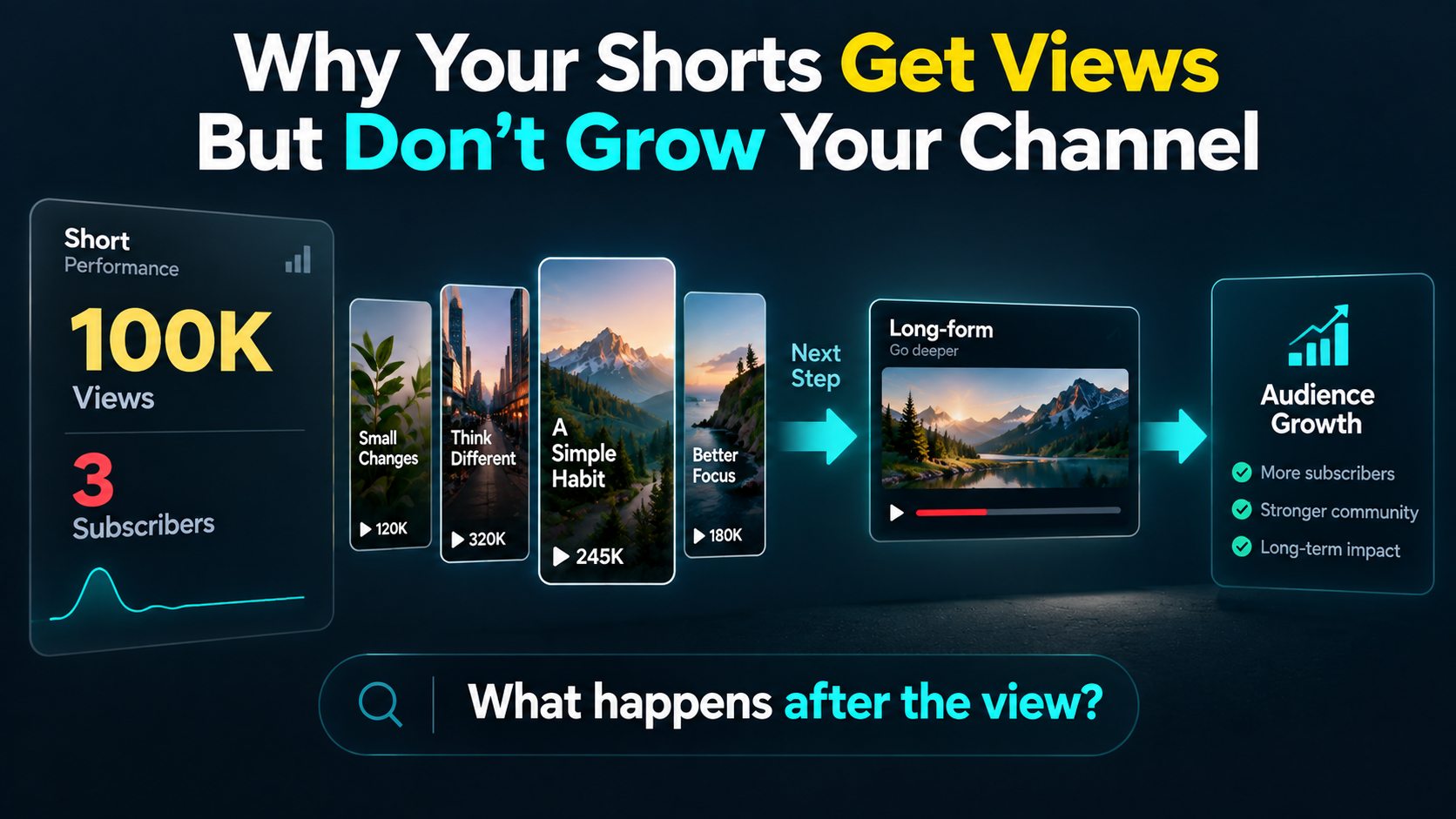
A Short can get you discovered. Growth starts with what happens after the view.
Start free with MintiStudio
Why a viral Short does not always grow your channel
Your Short gets 100,000 views.
You open your channel analytics expecting hundreds of new subscribers.
You got three.
So what happened?
The Short did not necessarily fail. It got you discovered. The problem is what happened next.
Views are not the same thing as audience growth.
A view means someone stopped long enough to watch your content. That is valuable. But it does not mean they know who you are. It does not mean they care about the rest of your channel. And it definitely does not mean they are ready to watch an eight-minute video from you.
Think about how you use Shorts yourself. You might watch a cooking tip, then a business story, then a football clip, then something about AI. You enjoyed all four. But that does not mean you want twenty minutes of content from all four creators.
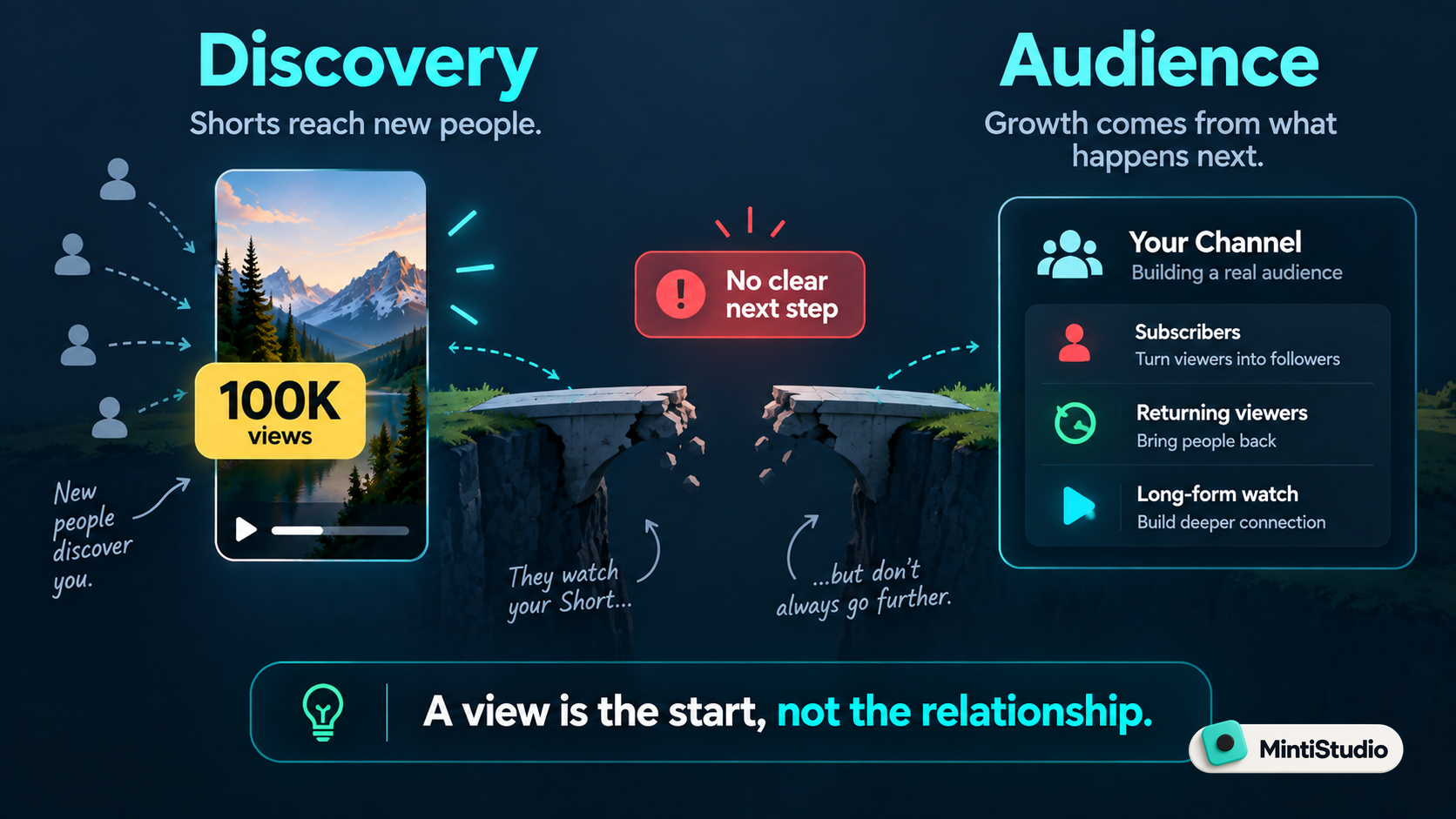
That is the difference between discovery and audience. A Short can introduce you to someone. But an introduction is not a relationship.
The wrong question creators ask
A lot of creators see a Short get thousands of views, then look at their long-form videos and wonder:
- Why did those viewers not come over here?
- Why did my subscribers not grow?
- Did the algorithm stop recommending me?
- Was the Short actually bad?
Usually, that is the wrong question. A better one:
Did the person who enjoyed this Short have a reason to watch anything else from me?
Getting discovered is only the first step. You still have to build the bridge — and that bridge starts before you add any links. It starts with audience match.
Audience match matters more than raw views
Imagine you have a channel about content creation. You publish a Short called:
This AI tool makes crazy videos
It goes viral. A huge audience might watch that — some interested in AI, some in the visual effect, some just curious about the tool. Now imagine the long-form video you want them to watch is:
How to build a sustainable content repurposing workflow
Those two pieces technically live in the same broad creator space. But they make very different promises. The viewer who wanted a crazy AI tool may have no interest in building a content workflow.
This is not an algorithm problem. It is an audience match problem — the Short and the long video promised two different things.
Now compare that with this pairing:
If AI finds 20 clips in your video, do not publish all 20.
How to turn one long video into a week of content
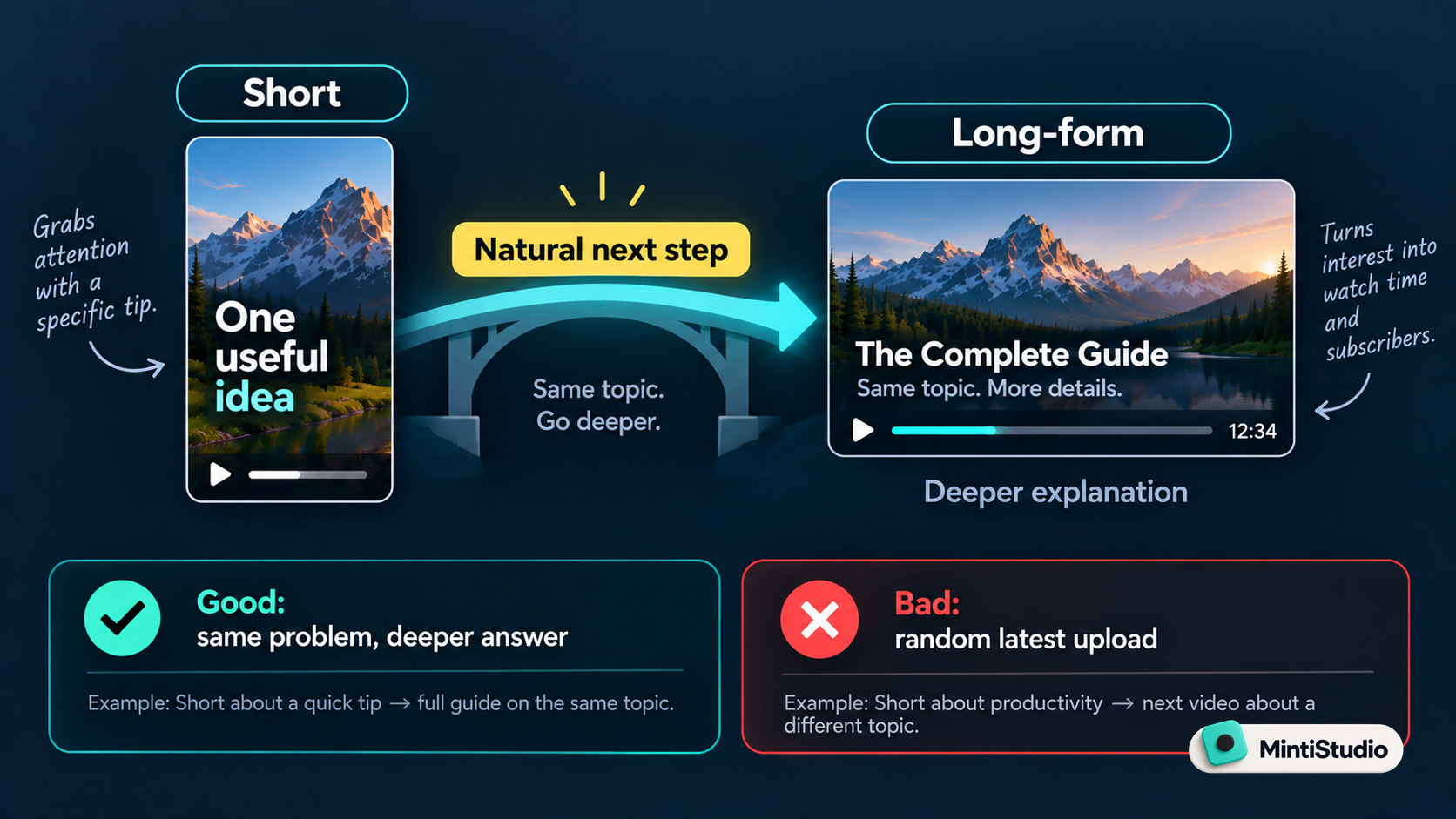
Now the connection makes sense. The Short introduced a problem; the long video goes deeper into that same problem. That is the kind of bridge you want to build.
| A view (discovery) | A subscriber (audience) | |
|---|---|---|
| What it is | Someone stopped scrolling long enough to watch | Someone chose to keep hearing from you |
| What they know about you | One moment, maybe your name | What your channel is about and why to return |
| What they watch next | The next Short in the feed | Your long-form, on purpose |
| What it is worth | Attention | A relationship |
We made a similar point in Shorts Are Not the Whole Strategy. They Are the Entry Point.: Shorts work best when they lead into a deeper content strategy.
Your Short is the front door
A simple way to think about Shorts: your Short is the front door. Getting someone through it is useful — but if there is no hallway to anywhere else, that is where the journey ends.
A lot of creators do exactly this. They make a good Short. Someone watches it, maybe even likes it. And then, nothing. There is no obvious next step, the viewer scrolls on, and the opportunity is gone.
So do not make people search for the next step. Give them one.
Use related videos, but choose them carefully
YouTube lets you associate another video from your channel with a Short — a direct path from the Short to more of your content. If you are connecting Shorts with long-form, this matters. But here is where creators make another mistake.
Do not just attach your latest long video because it is your latest. The related video should be the natural next chapter of the Short. If your Short is about writing better hooks, do not send the viewer to a video about camera equipment. If your Short is about turning a podcast into clips, do not send them to an unrelated productivity video. The link may exist, but the bridge does not.
Before choosing a related video, ask what someone who enjoyed this Short would naturally want to know next. That is the video you connect — not whatever you uploaded most recently.
Do not just add a link. Earn the click.
A related video link is not magic. It does not turn every Short viewer into a long-form viewer — the Short still has to create enough interest for someone to want more.
Think of the Short and the long video as two chapters of the same idea. The Short should give someone something valuable on its own; it should not feel incomplete or manipulative. But it can still reveal that there is a deeper layer.
Imagine a Short explaining one mistake creators make when repurposing content. The viewer gets the lesson — the Short works by itself. The long video then explains the complete workflow and four other mistakes. Now clicking makes sense: not because you begged, but because the next video continues something they already care about.
Don't treat the long video as a destination. Treat it as the next chapter.
A viral Short is data, not just a win
When a Short takes off, many creators celebrate the views and immediately copy surface details — the same editing, captions, length, music, format. But they skip the more important question:
Why did this particular idea connect?
A viral Short is more than a number. It is data. Look at the topic, the opening, the promise, and the comments, and ask:
- What question did people respond to?
- What made them stop scrolling?
- What did they want to know next?
- Which comments reveal deeper interest?
- Which idea could become a full video?
Say you normally talk about content creation, and one Short about writing hooks outperforms everything. Do not just say "great, I need more Shorts." Ask whether your audience is telling you they want more about hooks — and maybe your next long-form video, and your next three Shorts, should go deeper there.
This is where Shorts become more than a way to get views. They become a way to test ideas, discover what your audience actually cares about, and create entry points into deeper content.
Build a loop, not random clips
The strongest Shorts strategy is not random publishing. It is a loop. Start with one strong long-form video around a useful idea, find the moments that stand on their own, and turn the best ones into Shorts. Where there is a natural connection, use the related video feature to point viewers deeper.
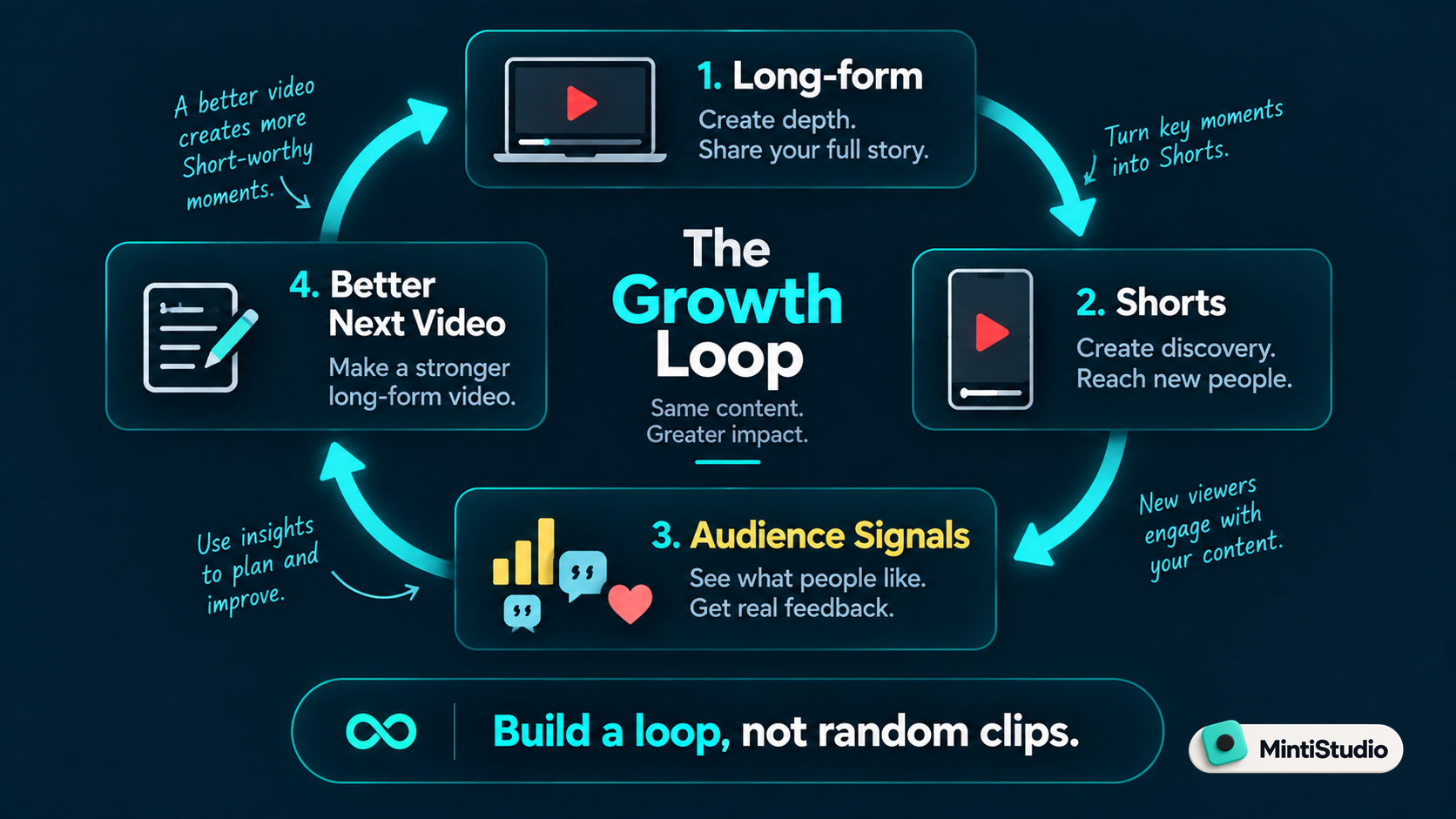
Then watch what happens:
- Which Short got attention?
- Which Short got comments?
- Which Short sent people deeper into the channel?
- Which topic brought people back?
- Which idea should become the next long-form video?
Now you have a growth loop. Long-form gives you depth. Shorts give you discovery. Discovery gives you information. That information helps you create better long-form content. Then the cycle starts again.
That is very different from publishing random Shorts and hoping some viewers magically become subscribers. You are building a path.
Where MintiStudio helps
If you are making Shorts from long-form videos, the goal is not just more clips. It is clips that connect back to the larger idea your channel is built around — so Shorts support the channel instead of becoming disconnected one-off posts.
MintiStudio helps with that workflow by turning long videos into usable short-form clips, so you can review the best moments, add captions, prepare clips, and keep a consistent publishing rhythm. For creators who want control, the DIY workflow lets you choose which moments represent your channel. For creators who want the outcome without managing every step, Autopilot turns long-form videos into a steady stream of published Shorts.
We explained that weekly system in The Weekly Shorts Workflow for Busy Creators and Video Clipping for Creators: How to Turn Long Videos into a Weekly Shorts Engine.
The better metric is what happens after the view
Do not measure a Short only by how many views it gets. Ask what happened after the view. Did it create interest? Did it lead somewhere meaningful? Did it help turn a viewer into part of your audience? Did it teach you what your next video should be about?
That is the difference between getting views and actually growing a channel. A Short can open the door — but growth comes from building the bridge and giving the right people a reason to cross it.
Look at your last three Shorts. For each one, ask: if someone liked this Short, what should they watch next? If there is no clear answer, that is the problem to fix. Don't just chase more views — build the path after the view.
Start free with MintiStudio
More from the blog

YouTube Shorts for Consultants: A Practical Workflow for Public Proof Without Sharing Client Confidentials
Consultants often have strong expertise locked inside private calls, workshops, and explainers. This guide shows how to turn those long recordings into buyer-relevant Shorts that build public proof, while keeping confidential details out of the workflow.

Turn Prospect Objections into Your Next Teaching Video
Use the questions prospects ask on sales calls to plan teaching videos that answer real objections, show your thinking, and create standalone moments that can become Shorts. This guide gives coaches and consultants a simple way to turn one conversation topic into a useful long video and a set of clip-ready lessons.