Do You Really Have to Pick a Lane? Long-Form vs Shorts After YouTube's 2027 Changes
Everyone's telling creators to "pick a lane" — long-form or Shorts — especially with YouTube's 2027 monetization changes. But the real problem is running two production lines, not the two formats. Here's how one video can feed both lanes.
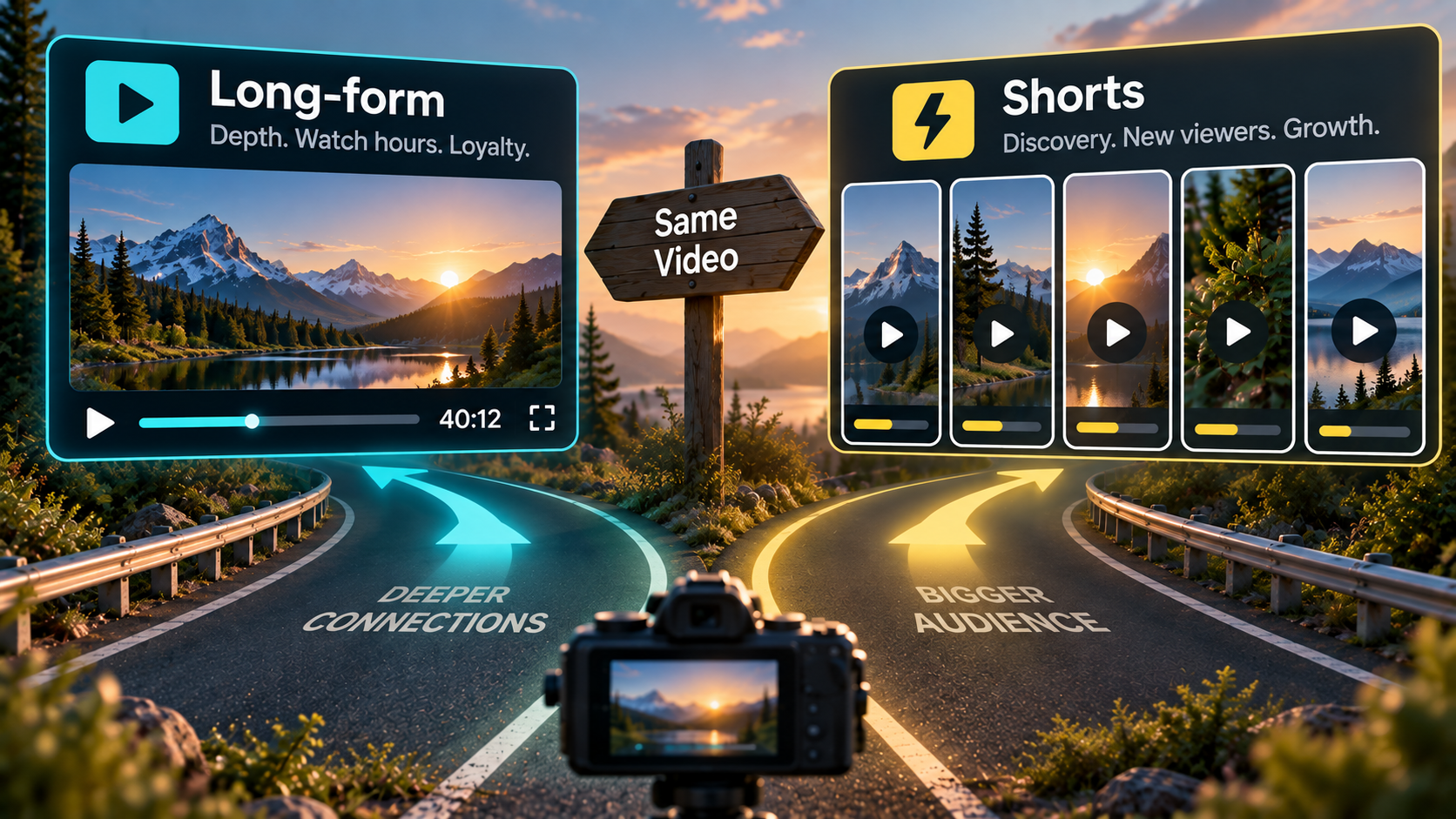
The popular advice says pick a lane. What if one video could run in both?
Start free with MintiStudio
"Pick a lane" is the advice everyone is giving right now
If you have watched any YouTube growth advice lately, you have probably heard the same line: pick a lane.
Focus on long-form or focus on Shorts. Do not try to do both.
The advice usually comes with a warning about YouTube's upcoming monetization changes, and the logic sounds reasonable: split your effort across two very different kinds of content and you grow slowly in both.
There is a real truth inside that advice. But it also hides a false choice — and for creators who make long-form video, that false choice can cost you.
Let's separate the part that is true from the part that is not.
What is actually changing in 2027
First, the facts, because a lot of the advice is built on them.
For new applicants to the YouTube Partner Program, the performance thresholds are rising on February 1, 2027:
- The long-form watch-hour requirement goes from 4,000 to 8,000 hours.
- The Shorts view requirement goes from 10 million to 20 million views in the last 90 days.
The 1,000-subscriber requirement stays the same, and channels already in the program keep their status.
There is also a separate, lower fan-funding tier — 500 subscribers plus 3,000 watch hours or 3 million Shorts views — that unlocks things like Super Thanks and memberships. That tier is not changing in February.
Always confirm the current numbers and your own status in YouTube Studio under the Earn tab. These rules change, and Studio shows exactly where your channel stands.
The takeaway most people draw is: the bar is going up, so focus everything on one path. That is where the reasoning goes slightly wrong.
Why the "pick a lane" advice exists
The advice is not wrong about the problem. It is wrong about the cause.
The real problem it is pointing at is effort.
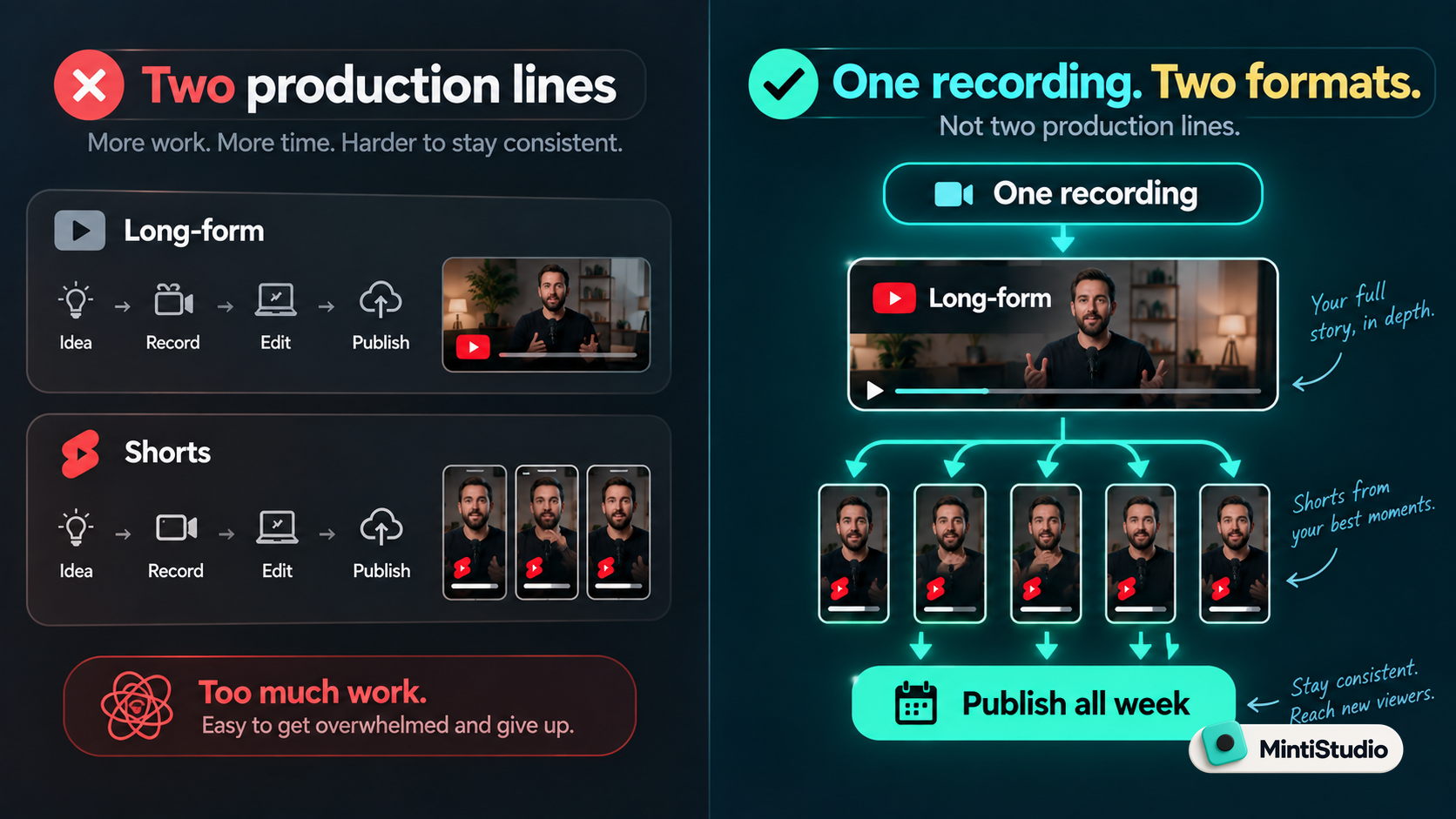
If you sit down to write, film, and edit a full long-form video, and then separately brainstorm, film, and edit a completely different batch of Shorts, you are running two production lines. For a solo creator, that is exhausting, and it usually means both lanes get done poorly.
So the advice says: drop one lane, and put all that effort into the other.
That solves the effort problem by removing half your presence on the platform. It works, but it is a blunt fix.
The sharper question is: what if the two lanes did not require two separate production lines?
The false choice: one video can feed both lanes
Here is the part the advice skips.
Your long-form video is not just a long-form video. It is also the raw material for a week of Shorts.
The lecture, interview, podcast, or tutorial you already recorded contains several moments that can each stand alone as a vertical clip. You do not have to invent new Shorts content. You extract it from the long-form you were already making.
That changes the math completely:
- Your long-form video works toward your watch-hour threshold.
- The Shorts pulled from it work toward your Shorts views and bring new viewers back to the long-form.
One recording. Both lanes. One production line instead of two.
Suddenly "pick a lane" is not the only option. The exhausting part — making two kinds of content from scratch — was never actually required. We walked through this extraction process in
Keep the focus where it belongs: your topic, not your format
This is where we keep the good part of the advice.
Focus does matter. The creators who grow fastest are specific about what they cover, not scattered across ten unrelated topics.
So pick a lane — but pick a topic lane, not a format lane.
Stay tightly focused on your subject. Then let that single focused topic flow into both a long-form video and the Shorts that come from it. That is focus and coverage at the same time, instead of focus at the cost of coverage.
And because those Shorts come from your own original long-form, they stay eligible. Reaction clips and compilations built from other people's content get flagged and removed from the revenue pool. Yours are original by default — you are reusing your own material, which is exactly what YouTube rewards.
Shorts and long-form actually help each other
The two lanes are not really competitors. They play different roles.
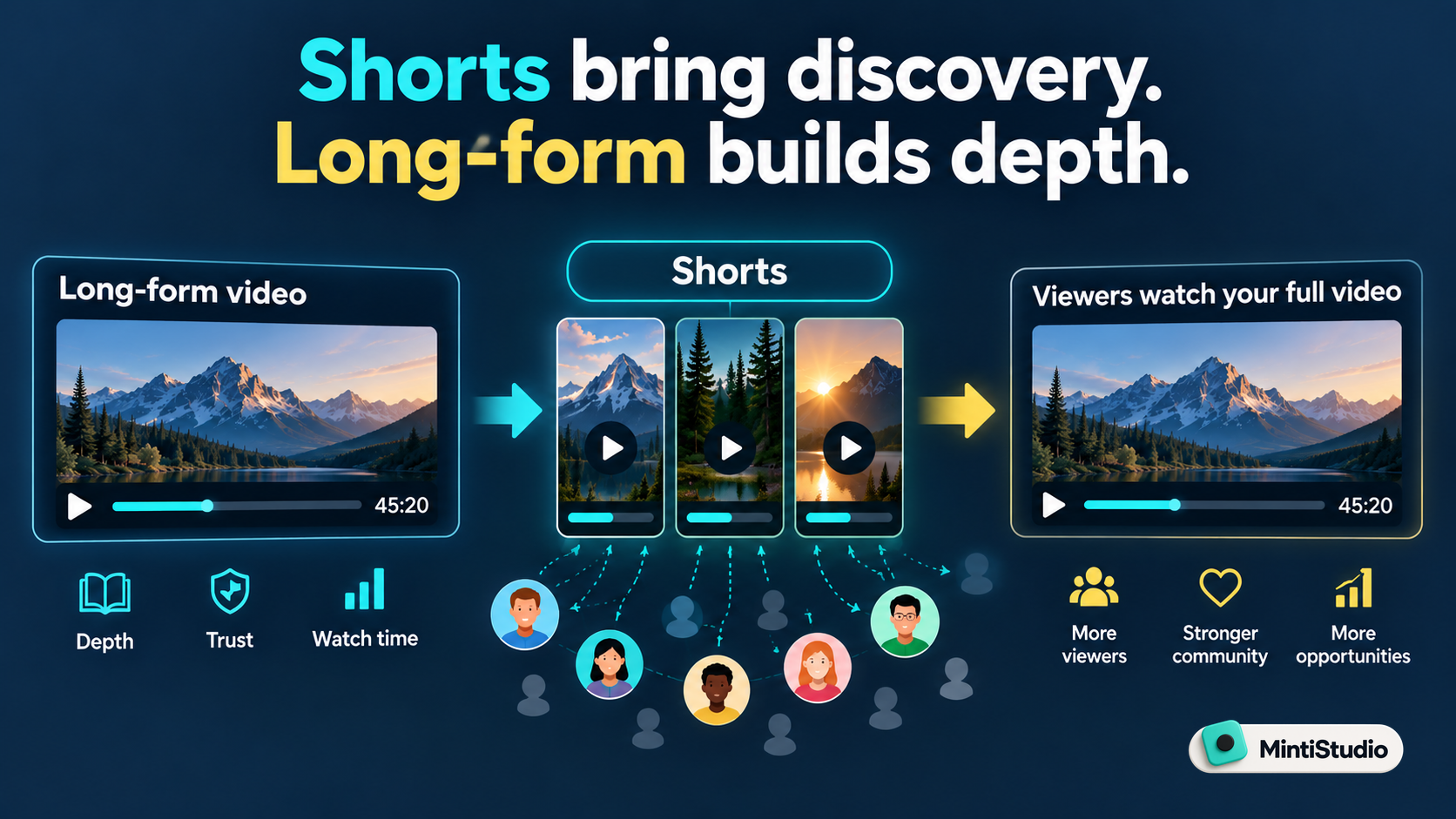
Shorts are discovery. A stranger scrolls past, watches one strong moment, and learns who you are. Long-form is depth. That is where the watch hours, the trust, and usually the income live.
A viewer who finds you through a Short and then watches the full video is worth far more than a view in either lane alone. We made this case in Shorts Are Not the Whole Strategy. They Are the Entry Point., and looked at the income side in How Creators Make Money From Shorts With a Small Channel.
Cutting one lane entirely means cutting one of those roles. You either lose your discovery engine or you lose your depth.
The real bottleneck is still consistency
So if one video can feed both lanes, why doesn't everyone do it?
Because the extraction still takes work, every single week.
Finding the strong moments, trimming them, adding captions, writing titles, scheduling, and publishing across platforms — on top of making the long-form itself — is exactly the grind that pushes people to give up and "pick a lane" in the first place.
The either/or was never really long-form versus Shorts. It was "do both well" versus "have enough hours in the week."
That is the problem worth solving. We wrote more about building a repeatable rhythm in The Weekly Shorts Workflow for Busy Creators and Video Clipping for Creators: How to Turn Long Videos into a Weekly Shorts Engine.
Where MintiStudio helps
This is exactly the gap MintiStudio was built to close.
The reason "run both lanes from one video" sounds good but rarely happens is that the weekly extraction work falls on one person. MintiStudio takes that work off your plate so the strategy is actually sustainable.
It comes in two tiers, and the difference matters here:
- DIY lets you do it yourself. Start from one long video, review AI-suggested moments, create vertical clips, add readable captions, and schedule across YouTube, Reels, and Facebook — while you stay in full control of which moments represent your channel. We covered that control in AI Can Suggest Your Clips. You Should Still Decide Which Ones Go Out..
- Autopilot is the done-for-you tier, and it is the real answer to "pick a lane." It is not a tool you learn and run yourself. It is a managed service that turns each long-form video into a steady stream of published Shorts for you — so both lanes keep moving from a single recording, even in your busiest weeks.
That is what makes running both lanes realistic instead of theoretical. You keep making the long-form content you are good at, and Autopilot keeps the Shorts lane fed from it — without you spending your evenings clipping.
You do not have to pick a lane. You have to remove the bottleneck that made picking one feel necessary.
A simple two-lane workflow
Here is a practical way to run both from one video:
- Stay focused on one topic lane.
- Record one strong long-form video on that topic.
- Pull three to five original Shorts from it.
- Make sure each Short stands on its own and opens fast.
- Publish the long-form, then schedule the Shorts across the week.
- Point Shorts viewers back to the full video.
- Track which moments pull people in, and make more like them.
One recording. Two lanes. One production line.
Next step
Take your most recent long-form video and find three moments that could stand on their own as Shorts.
Publish those clips this week and point them back to the full video — and notice that you just ran both lanes without making anything twice.
Related guides
- How Creators Make Money From Shorts With a Small Channel
- Shorts Are Not the Whole Strategy. They Are the Entry Point.
- How to Repurpose Long Videos into Short Clips
- The Weekly Shorts Workflow for Busy Creators
Start free with MintiStudio
More from the blog
YouTube Shorts for Consultants: A Practical Workflow for Public Proof Without Sharing Client Confidentials
Consultants often have strong expertise locked inside private calls, workshops, and explainers. This guide shows how to turn those long recordings into buyer-relevant Shorts that build public proof, while keeping confidential details out of the workflow.

Turn Prospect Objections into Your Next Teaching Video
Use the questions prospects ask on sales calls to plan teaching videos that answer real objections, show your thinking, and create standalone moments that can become Shorts. This guide gives coaches and consultants a simple way to turn one conversation topic into a useful long video and a set of clip-ready lessons.